Abstract
Food security means enough healthy food for everyone, everywhere. The opposite of food security, known as food insecurity, causes hunger. Hunger affects the lives of many families around the world. Hunger and food insecurity affect children the most. Hunger causes lower energy, less focus, more sicknesses, sad feelings, and poor sleep—all of which prevent children from growing and developing to their full potential. Hungry children can not learn well at school, they often cannot participate in activities like sports, and they get sick more frequently and for longer. The world produces enough food to feed every family, but food is not shared fairly. The Food Insecurity Experience Scale is commonly used to measure food insecurity, so we can tackle it. Today’s children are tomorrow’s leaders, scientists, inventors, and artists—your resourcefulness and compassion can help find new, effective solutions for food insecurity and hunger.
Food is One of the Basic Needs of Life
Without food, humanbeings cannot thrive or even survive! Imagine a world where everyone has enough healthy food. This is not the reality for many families in the world. These families are said to experience food insecurity. Food insecurity causes many health problems, of which hunger is one of the most important. You might have heard the terms “hunger” or “food insecurity”—but what do they mean?
What is Hunger?
Hunger occurs when there is not enough food to eat. Many of us may remember moments when we felt hungry. This could be because we skipped a meal or waited too long to have a snack, or the snack or meal was not enough for us to feel full. Can you remember how feeling hungry affected your mood? Perhaps you have heard the term “hangry”, which combines “hunger” and “anger”. When you do not eat enough, your body alerts your brain about hunger. Your brain can think of this as anger. Hunger reduces your focus, energy, and even your sleep. Many families around the world experience hunger—for a part of the day, all day for one day, or for many, many days.
What is Food Security?
Food security happens when families have enough healthy food. For children, food security is important for growing up. Food-secure children do not get sick as often and recover more quickly from illnesses. Food-secure children can more easily do well at school and are more likely to succeed in activities like sports. Food security goes beyond hunger. Being food secure means having enough healthy food within reach at all times. It means not worrying about where your next meal will come from, or if it will be enough and healthy.
Just like a dice, there are six sides to food security [1]:
• Enough amounts and types of healthy food are available in the market.
• Families can get to the healthy food when they need it.
• Families can pay for the healthy food when they need it.
• Family members can get the most health and satisfaction from the food they eat.
• Families can eat according to their culture and traditions.
• Sustainability of food, meaning the first five sides are also true for families in the future. This is to make sure your children, their children, and all future generations have food security.
Instructions to make your own dice by printing Figure 1:
1) Cut out the dice figure.
2) Fold in the shape of a cube.
3) Paste the additional areas surrounding the squares inside of the dice.

- Figure 1 - Components of food security.
- We cannot have a dice without six sides. Similarly, we cannot have food security without these six conditions. Make your own dice by printing this figure and following the instructions for cutting. Discuss what each side means to you with your friends and family as you roll it.
Types and Drivers of Food Insecurity
Some families can be food insecure for many months or years. This is called long-term or persistent food insecurity. The grown-ups of the family may not have jobs, or they may not earn enough money to feed the whole family. The markets where healthy food is sold could be far away, or food prices could be too high. The family may not have land and seeds to grow their own food. Multiple of these reasons could be true at the same time. Some families can be food insecure for a short time, like if the grown-ups lose their jobs for a few months or the family’s harvest fails for one season. This is called temporary food insecurity.
Three main drivers of food insecurity are:
• Climate change, which causes increasing temperatures and more frequent and more extreme weather events—for example, floods from too much rain or droughts from no rain at all. Extreme weather events can destroy the food in a community or an entire country. This affects families’ abilities to get to food, or may make food prices very high, or both. Increasing temperatures often reduce the amount and health benefits of food.
• Conflicts, which are fights between communities or wars between countries. Conflict often results from hanger. Families in conflict situations may lose the land where they grow food, along with their food or their jobs.
• Economy, which is the way people make and spend money. The economy of a community or country may not provide enough jobs. The jobs in the economy may not pay well, or there may be very high prices for food and other necessities.
These three drivers are related to each other, and they often make each other worse.
How is Food Security Measured?
The United Nations represents all countries in the world. In 2015, the United Nations set the Sustainable Development Goals. The first goal is to make sure no one in the world is poor. The second goal is to make sure no one in the world is hungry. These two goals are two sides of the same coin—to end one is to end the other. These two goals (along with 15 others) need to be achieved by 2030! We need to measure progress to understand if we are meeting these goals.
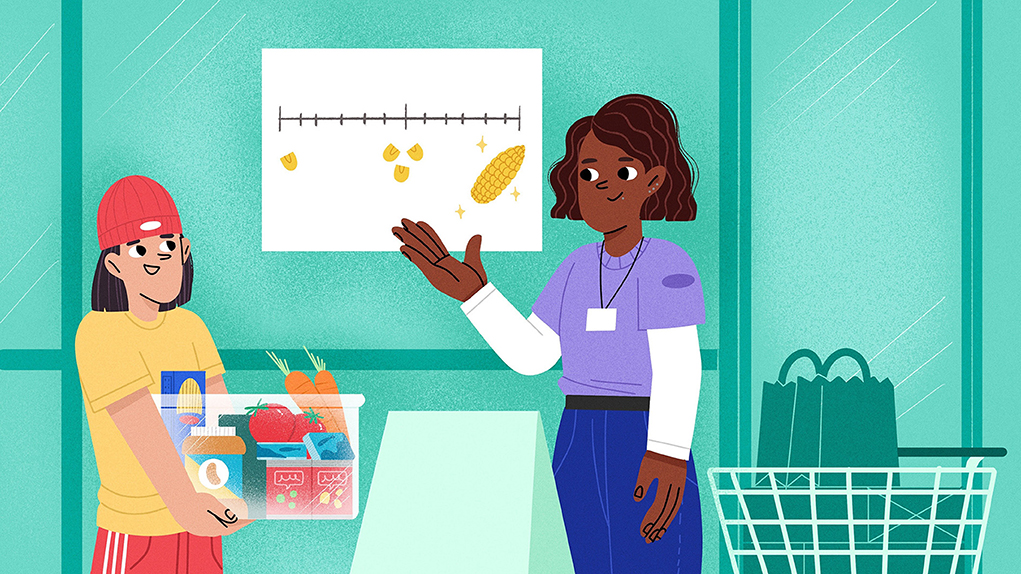
The United Nations created a tool to measure food insecurity, called the Food Insecurity Experience Scale. It is used in all countries around the world. It asks eight simple questions about the food a family eats, to try to capture responses in the following areas (Figure 2):
• Being worried about not having enough food
• Eating cheaper but less healthy food
• Eating smaller meals or portions
• Skipping meals altogether
• Not eating for one or more days

- Figure 2 - Food insecurity measured by the FAO.
Families all over the world experience food insecurity similarly. Using these same classifications helps us understand where food insecurity is. This information helps us tackle food insecurity where it is found.
Is the World Food Secure?
The world is not food secure. Almost one in every ten people goes to bed hungry. About three in ten people are food insecure and do not have enough money to buy healthy food [2]. The majority of food-insecure people are women and children.
Almost half of all hungry and food-insecure people in the world are in Asia. Africa has the highest fraction of food-insecure and hungry people. One in every five people in Africa is hungry. Hunger hotspots, defined by the UN, are areas with a high fraction of food-insecure families. The African region includes hotspots of highest concern—Mali, Sudan, and South Sudan. Haiti is also a hunger hotspot of the highest concern. Most recently, Gaza, in Palestine, has been added to this list. Each of these places suffers from one, two, or all three drivers of food insecurity, including negative impacts of climate change, war and conflicts, and poor economy.
In the US, hunger is on the rise [3]. Food prices are increasing, and many poor communities do not have food markets that sell healthy food. As a result, millions of poor families, the majority of which are Black and Latino, face food insecurity. Almost one in five children in the United States suffers from food insecurity. Recently several programs that help US families and children get to and pay for healthy foods (examples are school meals programs and programs that give grown-ups money to help them buy healthy food for their families), have been cut or reduced. This is expected to put many more children at risk of food insecurity during the school year, and beyond.
How Can We Improve Food Security for Everyone?
The whole world needs to work together to tackle hunger and food insecurity. There are many new ideas, methods, and devices to improve food production. New seeds can naturally produce more food, and some seeds can grow food in extreme weather conditions, like too much or no rain. Cooking and storing methods and tools can keep food fresh and healthy. Phone apps and the internet can help connect food sellers and buyers. Governments also support food-insecure families through free school meals for all children, for example. Government programs that help grown-ups find jobs, and those that educate families to make healthier food choices should be strengthened. People can also help each other by establishing food banks in food-insecure communities or by providing emergency food aid to families in hunger hotspots.
Now that you know about hunger and food insecurity, you can start taking action right away! You can start by educating your parents about healthier food choices you learn about at school. You can help reduce food waste at home, such as by keeping quick-to-spoil foods at the front of the fridge to eat first, freezing foods that are about to spoil, donating excess food to local pantries, and trying new healthy foods.
We believe in you to find better and bigger solutions to end food insecurity for all.
Glossary
Food Insecurity: ↑ Not having enough, safe, heathy, and culturally acceptable food to eat and not knowing when and from where the next meal will come.
Hunger: ↑ Lack of enough food.
Food Security: ↑ Having enough, safe, healthy, and culturally acceptable food, always and for everyone.
Sustainability: ↑ The ability to be maintained for the future, and/or at a certain level.
Hunger Hotspot: ↑ Geographic area where a great majority of people are highly food insecure.
Food Bank: ↑ Non-profit organization that stocks and distributes food to people in need and free of charge, through places like food pantries or soup kitchens, to avoid temporary hunger.
Conflict of Interest
The authors declare that the research was conducted in the absence of any commercial or financial relationships that could be construed as a potential conflict of interest.
AI Tool Statement
The author(s) declare that no Gen AI was used in the creation of this manuscript.
Any alternative text (alt text) provided alongside figures in this article has been generated by Frontiers with the support of artificial intelligence and reasonable efforts have been made to ensure accuracy, including review by the authors wherever possible. If you identify any issues, please contact us.
References
[1] ↑ Clapp, J., Moseley, W. G., Burlingame, B., and Termine, P. 2022. The case for a six-dimensional food security framework. Food Policy 106:102164. doi: 10.1016/j.foodpol.2021.102164
[2] ↑ FAO, UNICEF, WFP, and WHO. 2025. The State of Food Security and Nutrition in the World 2025 – Addressing High Food Price Inflation for Food Security and Nutrition. Rome, Italy. doi: 10.4060/cd6008en
[3] ↑ Rabbitt, M. P., Hales, L. J., Burke, M. P., and Coleman-Jensen, A. 2023. Household food security in the United States in 2022 (Report No. ERR-325). U.S. Department of Agriculture, Economic Research Service. Available online https://www.ers.usda.gov/webdocs/publications/107703/err-325.pdf?v=7814.4 (Accessed November 27, 2025).