Abstract
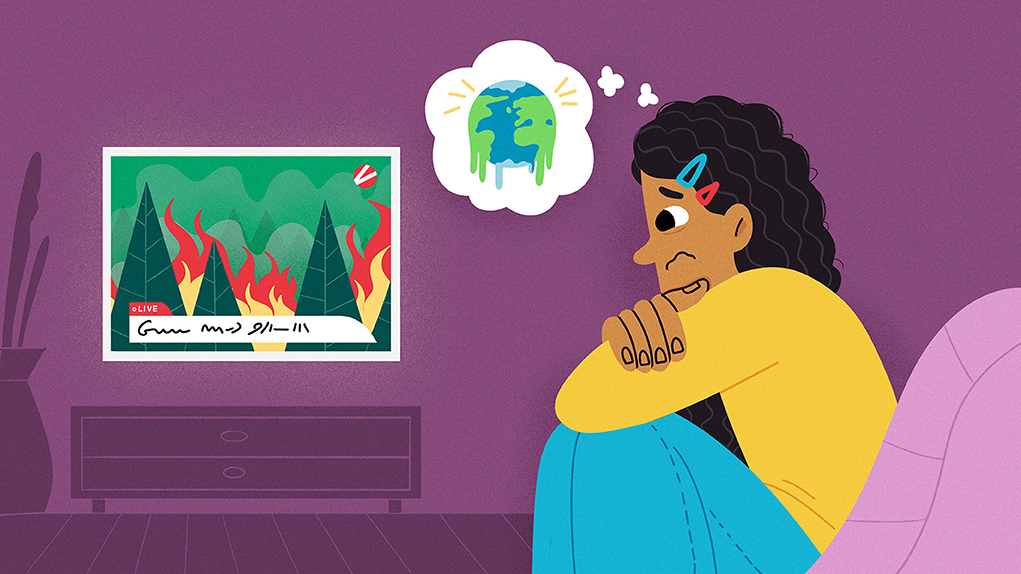
Our planet is getting hotter, changing local and global environments that affect every living thing. This process is called climate change, and many people around the world are already noticing its impacts. Others may not have personally experienced changes yet, but they might still worry about climate-related changes and what may happen in their areas or around the world. The kind of worry that lasts for a long time, is hard to control, and gets in the way of doing things is called anxiety. Anxiety about climate change can be called eco-anxiety. As more people learn about climate change or experience its impacts, more people may experience eco-anxiety. Therefore, it is important to learn what eco-anxiety is, who is affected by it, and what can be done to help people who are dealing with it.
What is Climate Change?
Climate change is defined as changes to our planet caused by increases in greenhouse gasses (like carbon dioxide, methane, and nitrous oxide) in the atmosphere. These gasses trap heat from the sun and cause Earth’s temperature to increase. Scientists have proven that higher temperatures cause glaciers to melt and sea levels to rise, which can dramatically change the habitats where plants and animals live. Other evidence of climate change includes more frequent droughts, heat waves, wildfires, and powerful storms like hurricanes—all of which threaten plants, animals, and humans [1].
What is Anxiety?
Stress, fear, and anxiety all have things in common, but there are important differences between them. Stress is a response to a difficult, frustrating, or overwhelming situation. Fear is the feeling you have in response to a real, known, or current danger or threat. Anxiety is worry about an unclear, unknown, or future danger or threat. Anxiety is a combination of scary thoughts and feelings that normally helps humans survive by telling us to take fewer risks, look for safety, and avoid potential danger. However, sometimes anxiety gets in the way of things that we want or need to do, or it alerts us to things that are not actually dangerous (like when you have to give a class presentation). When this happens, anxiety is like a “false alarm”, similar to when somebody pulls the fire alarm by accident but there is no fire.
What is Eco-Anxiety?
People can have anxiety about a lot of things, like spiders, meeting new people, pop quizzes, or the dentist. Some people are really worried about climate change, the future of our planet, and the things that live here. This worry is called eco-anxiety [1].
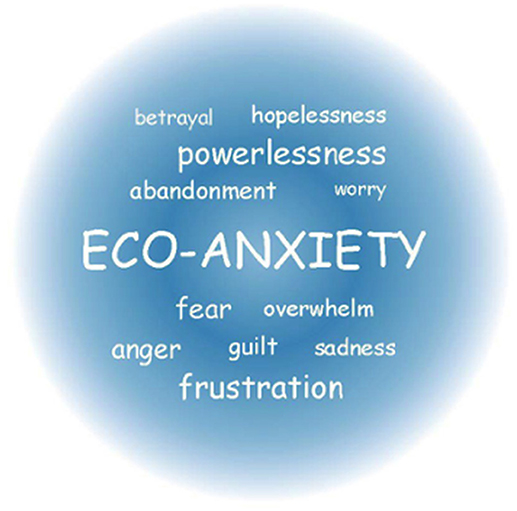
Eco-anxiety is unique because it involves both anxiety (worry about an uncertain future) and fear (worry about known events). It makes sense for people to worry about the environment, because scientists know climate change is real, it is dangerous, and it is happening. Many children and young people feel frustrated, sad, hopeless, guilty, powerless, and angry about climate change (Figure 1) [2, 3]. All of these emotions are normal! It can be scary and frustrating to know that climate change is happening and to feel like there is nothing you can do to stop it.
Who Might Feel Eco-Anxiety?
Anyone might feel eco-anxiety. Many people in places affected by recent natural disasters, like coastal areas or islands, report more eco-anxiety than people in other places. But eco-anxiety can also affect people who have not experienced extreme weather personally; some people are anxious just thinking about climate change or seeing it in the media. A big part of all types of anxiety (including eco-anxiety) is not knowing and not having control.
Although anybody can feel eco-anxiety, some people feel it more than others. For example, people who care a lot about the environment and know more about climate change may feel more afraid, sad, angry, and worried [2]. A lot of people might not think of climate change as a problem to worry about right now, because it happens gradually and is not always obvious day to day. There are also some people who do not believe in climate change at all, even though we have scientific proof that it is real. It might make you feel especially sad or hopeless when you are trying to help the planet, but other people either are not listening, do not care, or do not understand how big of a problem climate change actually is.
Other people who might feel eco-anxiety strongly are those who feel connected to the land and the creatures that live there. For example, studies show that many Indigenous peoples report high eco-anxiety. Many Indigenous communities value respect for nature as part of their cultures and identities; therefore, they may be more aware of environmental changes and feel more eco-anxiety as a result [1].
Another group that reports high eco-anxiety is people with disabilities or chronic illnesses who may not be able to protect themselves or recover as well from something like a powerful storm or a disease caused by climate change [1]. Climate change can also make finding resources like food more difficult, which adds more stress to families who may have already been struggling with food or financial instability.
Children are one of the biggest groups affected by eco-anxiety. In a survey of 10,000 youth ages 16–25 across 10 countries, most (95%) were worried about climate change and more than half (59%) felt very or extremely worried about it (Figure 2). Almost half (45%) said that their thoughts and feelings about climate change negatively affected their daily lives, and 75% were afraid for the future [4]. In another study of 600 children ages 10–14, about 25% worried that the world would end before they get older [5].
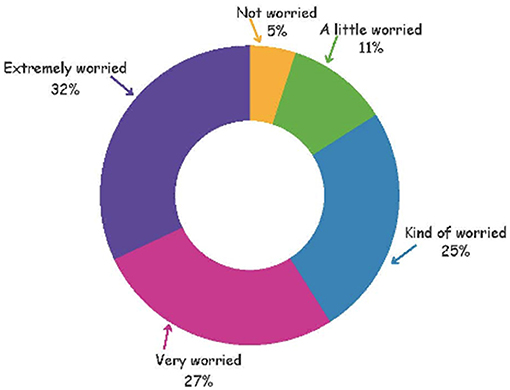
- Figure 2 - 10,000 young people, ages 16–25, were asked to rate how worried they were about climate change in Spring 2021.
- An equal number of youth were surveyed in each of these ten countries: Australia, Brazil, Finland, France, India, Nigeria, Philippines, Portugal, the United Kingdom, and the United States [4].
Eco-anxiety can feel especially overwhelming for children for three reasons. First, their generation will be the most affected by climate change as they grow up. Second, young people have more access to social media, where news about climate change spreads quickly. Third, it may often feel like adults do not take children’s thoughts or opinions seriously. Young people can feel betrayed and abandoned by the government and other adults in power who do not pay enough attention to climate change and are not addressing the problem [4].
How to Cope With Eco-Anxiety
If you are experiencing eco-anxiety, there are multiple ways to cope (Figure 3).
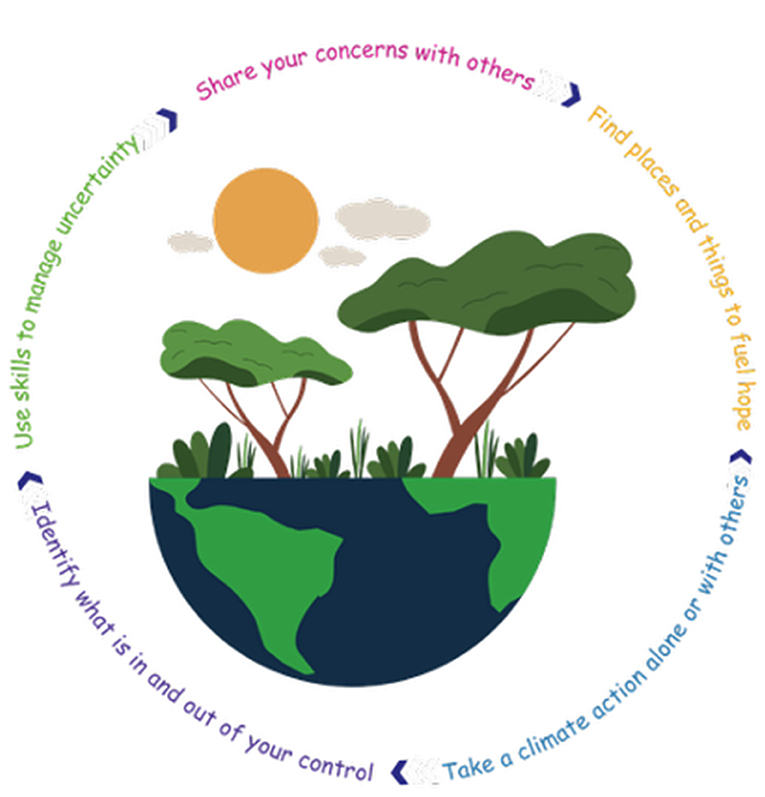
Surround yourself with others who care about the environment. Finding people who share your values can make you feel less anxious and alone. It can hurt when parents, friends, family, or other adults do not listen to your feelings about climate change. It can help to seek out people who do understand and are open to talking about it. It can also be frustrating to feel like you alone cannot make much of a difference. These feelings of hopelessness and powerlessness can make eco-anxiety worse. Realizing you are not alone and working with others to help the environment can decrease eco-anxiety and increase feelings of hope [3]. Hope is important because research shows that hope lowers eco-anxiety. Also, hope is linked to action, and taking climate action can help our planet [2]!
You have power to make changes in the world! Take climate action by joining environmental clubs, participating in group events like trash cleanups, and speaking up to make your voice heard! This creates hope. Making an effort to help the environment, either by yourself or together as a group, is called climate action. Examples of climate action include saving water, recycling, or joining a club or organization that helps the planet. One famous young climate activist is Greta Thunberg, who is determined to make her voice heard among children, adults, and politicians all over the world. If she can do it, you can, too! In 2019, about 1.6 million youth across 125 countries demanded that people work harder to fight climate change [6]. It is true that young people will likely be among the most affected by climate change, but you also have the power to make a change, especially by working together!
Another thing that can help you cope with eco-anxiety is to recognize things you can control and to accept things that you cannot. You can control your own actions, and you can work with likeminded people to make positive changes in the world; you cannot control other people’s thoughts or actions.
Additionally, eco-anxiety (like all kinds of anxiety) involves a lot of uncertainty, which can feel scary. How can you do your best to tolerate this uncertainty and still enjoy life according to your values? Activities like journaling or connecting with nature can make you feel more calm, happy, and at peace. You can also try practicing mindfulness when eco-anxiety feels overwhelming. Mindfulness is about paying attention to things like your breath, sounds, or sensations to bring you back to the present moment without judgments. A lot of these skills help keep eco-anxiety under control, but sometimes people might need extra help. If you are feeling overwhelmed, reach out to a parent, teacher, counselor, or other trusted adult who can listen and maybe connect you to a healthcare professional, like a therapist, who can help.
Moving Forward With Hope and Eco-Anxiety
People can have anxiety about a lot of different things. Eco-anxiety can feel especially scary because scientists have proven that climate change is happening, but many people believe they do not have any power to stop it. Anyone might experience eco-anxiety, but studies show that some people report feeling it more strongly than others. Children and young people can feel more eco-anxiety because climate change directly affects them and because tools like social media spread news about climate change quickly. Furthermore, adults might not take children’s thoughts and opinions seriously.
If you or someone you know is experiencing eco-anxiety, remember there are lots of things that can help, including taking climate action, surrounding yourself with others who care about the environment, learning how you react to uncertainty and what helps keep uncertainty manageable for you, and feeding your resilience with the tools that help you the most. You can have eco-anxiety while also helping yourself and the planet.
Glossary
Climate Change: ↑ Changes to our planet caused by increased greenhouse gasses (carbon dioxide, methane, and nitrous oxide) that trap heat from the sun and cause Earth’s temperature to increase.
Stress: ↑ A response to a difficult, frustrating, or overwhelming situation.
Fear: ↑ A feeling in response to a real, known, or current danger or threat.
Anxiety: ↑ Worry about an unclear, unknown, or future danger or threat.
Eco-anxiety: ↑ Worry about climate change, the future of our planet, and the things that live here.
Indigenous: ↑ Native or original to a certain geographic area.
Climate Action: ↑ Making an effort to help the environment, either by yourself or as part of a group.
Conflict of Interest
The author(s) declared that this work was conducted in the absence of any commercial or financial relationships that could be construed as a potential conflict of interest.
AI Tool Statement
The author(s) declared that generative AI was not used in the creation of this manuscript.
Any alternative text (alt text) provided alongside figures in this article has been generated by Frontiers with the support of artificial intelligence and reasonable efforts have been made to ensure accuracy, including review by the authors wherever possible. If you identify any issues, please contact us.
References
[1] ↑ Clayton, S., Manning, C., Krygsman, K. M., and Speiser, M. 2017. Mental Health and our Changing Climate: Impacts, Implications, and Guidance. Washington, DC: American Psychological Association and ecoAmerica.
[2] ↑ Léger-Goodes, T., Malboeuf-Hurtubise, C., Mastine, T., Généreux, M., Paradis, P. O., and Camden, C. 2022. Eco-anxiety in children: a scoping review of the mental health impacts of the awareness of climate change. Front. Psychol. 13:872544. doi: 10.3389/fpsyg.2022.872544
[3] ↑ Gunasiri, H., Wang, Y., Watkins, E. M., Capetola, T., Henderson-Wilson, C., Patrick, R. 2022. Hope, coping and eco-anxiety: young people’s mental health in a climate- impacted Australia. Int. J. Environ. Res. Public Health 19:5528. doi: 10.3390/ijerph19095528
[4] ↑ Hickman, C., Marks, E., Pihkala, P., Clayton, S., Lewandowski, R. E., Mayall, E. E., et al. 2021. Climate anxiety in children and young people and their beliefs about government responses to climate change: a global survey. Lancet Planet. Health, 5:e863–73. doi: 10.1016/s2542-519600278-3
[5] ↑ Tucci, J., Mitchell, J., and Goddard, C. 2007. Children’s Fears, Hopes and Heroes: Modern Childhood in Australia. Melbourne: Australian Childhood Foundation.
[6] ↑ Wu, J., Snell, G. H., and Samji, H. 2020. Climate anxiety in young people: a call to action. Lancet Planet. Health 4:e435–6. doi: 10.1016/S2542-519630223-0