Drug Delivery Concepts Explained
Collection Editors
David Brayden, Catherine Tuleu, Hannah Batchelor, Nikoletta FotakiViews
4,370 viewsParticipating Sections


Abstract Submission Deadline
16.09.2026
Submission Deadline
17.09.2026
Extended Deadline
18.09.2026
Articles

About this collection


In collaboration with Frontiers in Drug Delivery and supported by the European Pediatric Formulation Initiative (EuPFI)
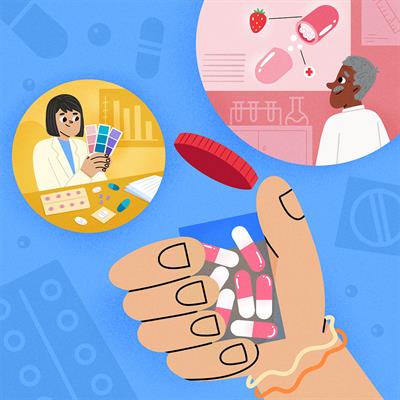
How do scientists turn a chemical discovery into a medicine that children can swallow, breathe in, rub on their skin, or even receive through an injection? The answer involves much more than the active ingredient itself. A medicine must also be the right dose, the right form, and the right fit for a child’s age, needs, and daily life. It may need to taste okay, be easy to swallow, work well when mixed with food, or be given by a unique route other than a standard pill. Creating medicines for children means thinking carefully about how they will work in real life.
Many factors shape kid-friendly medicines. Some factors are the ones children notice right away, such as taste, color, size, and texture. A bitter liquid, a chalky tablet, or a large capsule may be much harder for a child to accept than a smaller, smoother, or better-tasting alternative. Other factors are “hidden” inside the medicine itself. Alongside the active chemical, certain other ingredients, called excipients, can help a medicine dissolve properly, taste better, stay stable on the shelf, or be easier to take.
New and exciting methods are emerging to tailor medicines to individual children. These include mini-tablets, 3D-printed medicines, and other approaches that can help match the medicine to a child’s specific needs. In some situations, medicines must be given in less familiar ways, such as through feeding tubes or through the rectum. These examples show how drug delivery scientists adapt medicines for different patients, circumstances, and stages of childhood.
This Frontiers for Young Minds Collection shows that making medicines for children is not simply a matter of shrinking adult treatments into smaller doses. It requires thoughtful design, testing, and collaboration to make medicines safe, effective, acceptable, and practical for everyday life. Beyond the design of medicines, the Collection also considers how children and young people can help shape medicine development through their involvement in research and decision making, bringing perspectives that adults might miss. Young readers will see that every part of a medicine, from its ingredients to the way it is made and given, can affect how well it works for children.
Would you like to submit to this collection?
For researchers interested in submitting to this Collection, please consult our author guidelines and check that you have all the essentials included before submitting